


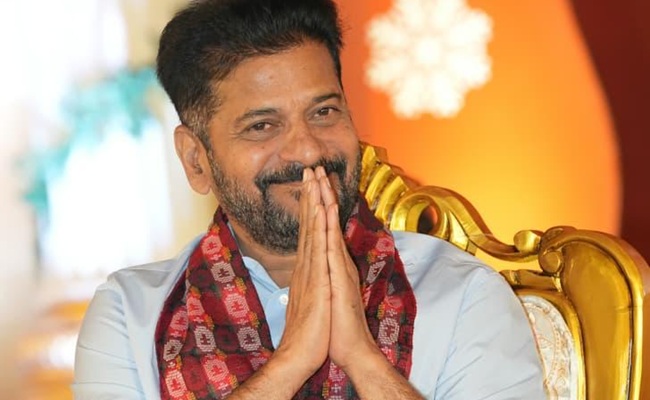
The Congress, under the leadership of Telangana Chief Minister A Revanth Reddy, is slowly but steadily improving its political position within the Greater Hyderabad Municipal Corporation (GHMC) limits, where the party had been faring badly in the elections in the last 10 years.
For the Congress, Hyderabad has been one of its weakest regions in Telangana.
The scale of that weakness was evident in the 2020 GHMC elections, where the party put up a dismal performance, winning just two out of 150 divisions.
The setback was so severe that it triggered major embarrassment within the party.
The situation did not improve immediately in the November 2023 assembly elections either. Despite coming to power in the state, the Congress failed to win even a single one of the 24 assembly constituencies within GHMC limits.
The BRS dominated the urban map with 16 seats, while the AIMIM retained its stronghold with seven, and the BJP held on to Goshamahal.
The results underscored a clear political reality: while the Congress had succeeded in capturing rural and semi-urban Telangana, Hyderabad city remained largely outside its electoral reach.
However, the political picture appears to be changing gradually under Revanth Reddy’s stewardship.
Though the Congress started from a position of deep weakness in Hyderabad, there are now early indicators that the party is regaining relevance in the city and its surrounding urban belt, particularly in Hyderabad and Ranga Reddy district.
The party’s victories in the Secunderabad Cantonment and Jubilee Hills assembly by-elections have given the Congress much-needed political momentum within the metropolitan region.
That emerging shift is being linked directly to Revanth Reddy’s governance and political strategy, which appears to be centred on making Hyderabad and its periphery the face of his administration’s developmental agenda.
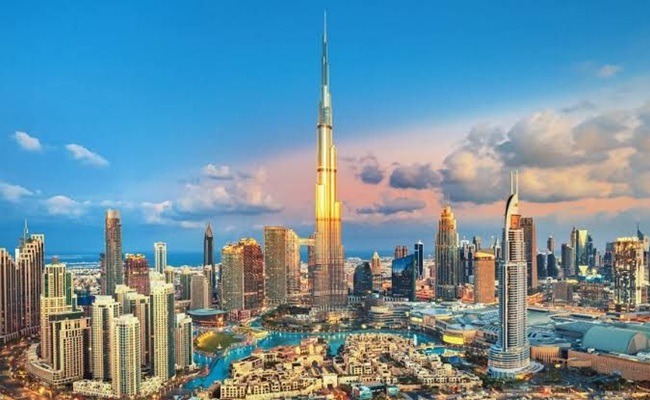
While the BRS built its urban appeal largely around Hyderabad’s established brand as a global city, Revanth Reddy continued the trend and consciously focused on a series of high-visibility developmental and image-building initiatives in and around Hyderabad.
Despite the BRS repeatedly claiming that Hyderabad’s brand value has declined under the Congress government, the Revanth Reddy administration has sought to counter the propaganda aggressively.
From attracting fresh IT and investment commitments to hosting globally visible events such as the Miss World pageant, the Global Telangana Rising 2026 summit, and even facilitating football icon Lionel Messi’s visit to Hyderabad, the Congress government has attempted to send out a message that Hyderabad remains globally relevant and investment-friendly under its rule.
This is politically significant because urban voters in Hyderabad are often more responsive to issues such as infrastructure, global branding, employment, mobility, and investment climate than to purely welfare-based political messaging.
Revanth Reddy appears to have recognised that Congress cannot grow in GHMC simply by relying on anti-incumbency against the BRS; it needs to create a fresh urban aspiration narrative of its own.
One of the most important — and politically risky — interventions made by the Revanth Reddy government has been the creation and empowerment of HYDRAA, the agency tasked with acting against illegal constructions and encroachments.
Initially, HYDRAA generated considerable public anger, especially among sections directly affected by demolition drives and enforcement actions.
Opposition parties attempted to portray the exercise as arbitrary and anti-people. Yet, over time, the perception appears to have evolved.
As HYDRAA’s actions began to be associated with the protection of public lands, valuable urban properties, and the restoration of encroached lakes and water bodies, a section of urban residents started viewing the initiative more favourably. In a city long troubled by unchecked encroachments, illegal layouts, shrinking lakes, and unplanned growth, the enforcement drive has begun to resonate with middle-class and civic-conscious voters.
Another major plank of Revanth Reddy’s urban strategy is the proposed Musi rejuvenation and riverfront development project.
The chief minister is clearly trying to project the initiative as a transformative civic intervention that could redefine Hyderabad’s urban landscape in the long run.
The proposal has triggered stiff resistance from opposition parties as well as apprehension among people residing along the Musi river belt, many of whom fear displacement and livelihood disruption.
The BRS and other critics have tried to frame the project as politically motivated and socially disruptive.
Yet, Revanth Reddy seems determined to push ahead. His calculation appears to be that if the project is eventually executed with visible outcomes, it could become one of the defining urban legacy initiatives of his tenure.
The real political test of Revanth Reddy’s urban strategy will come in the next GHMC elections. Those elections will reveal whether the Congress’ current gains are merely episodic or whether they reflect a deeper political shift in Hyderabad.
More importantly, they will indicate whether Revanth Reddy has been able to convert his governance visibility into durable electoral traction within the city.
If the Congress manages to substantially improve its tally in GHMC and emerge as a serious challenger in urban Telangana, it would mark one of the most significant political turnarounds for the party in the state.