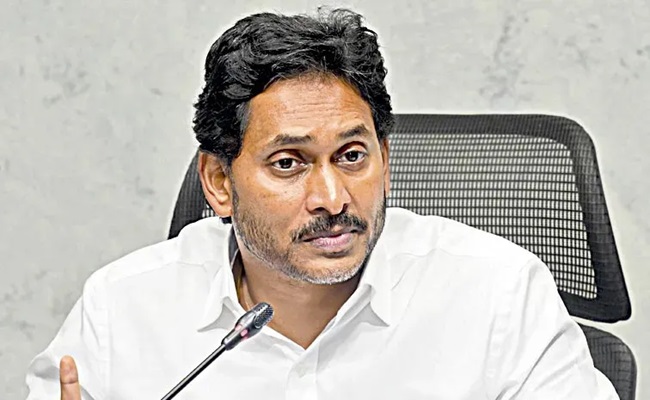



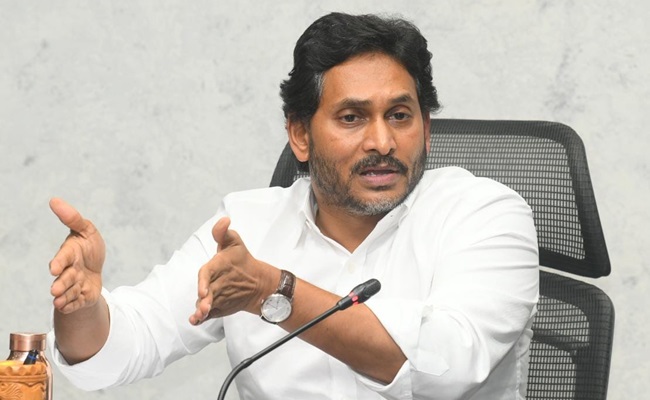
As the Central government is set to declare Amaravati as the permanent capital of Andhra Pradesh by amending the AP Reorganisation Act, 2014, YSR Congress Party president and former Chief Minister Y S Jagan Mohan Reddy on Wednesday stirred a fresh debate by proposing an alternative plan, calling it a “Plan B” for the capital region.
Addressing a media conference, Jagan suggested that instead of limiting the capital to Amaravati, the government should consider declaring a larger urban corridor stretching from Machilipatnam to Vijayawada and Guntur as the state’s capital area.
He proposed developing this region as an integrated capital zone, arguing that such a model would support long-term economic and infrastructure growth.
Jagan said the proposed capital belt would cover a 110-kilometre corridor, connecting Machilipatnam, Vijayawada, and Guntur.
He claimed that this region has the potential to become Andhra Pradesh’s future “growth engine.”
He also suggested naming the corridor “MA-VI-GUN,” an acronym formed from the three cities — Machilipatnam, Vijayawada, and Guntur.
He added that if the name was seen as politically linked to him, the government was free to choose another name.
“If you feel the name reminds people of me, you can give it a different name,” he said.
Explaining his proposal, Jagan noted that Machilipatnam is about 70 km from Vijayawada, and Vijayawada is around 40 km from Guntur, making the three-city stretch a natural urban cluster.
He argued that instead of concentrating all development in one limited area, the government should declare the entire corridor as a capital region or capital corridor, allowing for balanced and distributed development.
According to him, the combined population of these three regions is close to 40 lakh, and with focused investment in infrastructure, connectivity, administration, and urban services, the region can grow rapidly in a planned manner.
Jagan clarified that the YSR Congress Party is not against Amaravati or any region, and maintained that the party has never taken an anti-regional stand on the capital issue.
He presented the proposal as a development-focused alternative, rather than a political rejection of Amaravati.