



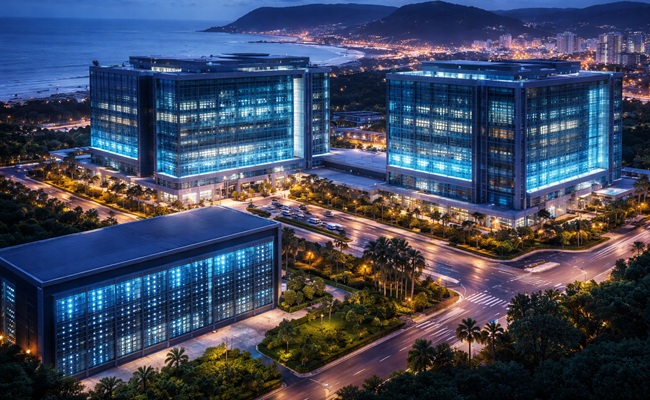
Across the United States, governments are becoming cautious about allowing large data centers. In Maine, Democratic lawmaker Melanie Sachs introduced a bill to place a temporary ban on new large data centers.
The idea is to pause approvals until 2027 so the state can study how much electricity and water these facilities consume and how they affect the local economy and environment.
Similar discussions are taking place in other states including New York, South Carolina, Oklahoma and Vermont.
Lawmakers say public policy has not kept pace with the rapid growth of the industry and that communities often learn about projects only after plans are already in motion.
The concern is understandable when one looks at the scale of expansion. The United States already hosts more than 4,000 data centers.
Virginia has the largest data center cluster in the world, while major clusters are also growing in Texas and California.
These massive facilities power artificial intelligence systems and cloud computing networks. But they also require enormous quantities of electricity and water to run and cool their servers.
In many regions people worry that such demand could increase electricity prices and put pressure on local resources.
In fact, more than 140 local groups across the country have already blocked or delayed over 60 billion dollars worth of data center investments in a little over a year.
From the perspective of Visakhapatnam and Andhra Pradesh, these developments deserve careful attention.
Even as many parts of the world slow down and study the risks, there is strong enthusiasm here to invite large data center investments.
Data centers are not ordinary industries. They demand uninterrupted power supply, heavy infrastructure and large quantities of water for cooling systems.
Vizag already faces environmental and urban pressures. The city is expanding rapidly and energy demand is rising each year.
Encouraging multiple energy intensive data centers without careful planning could strain power systems and water resources further.
When several regions in the United States are pausing to study the impact of such projects, Andhra Pradesh too should consider a balanced approach.
Development should continue, but it must be guided by careful study, transparency and public discussion about long term consequences.
Another important point must also be remembered. Every investment coming from international technology companies should not automatically be celebrated as a big success.
Governments and the public must carefully study environmental risks, energy consumption and long term ecological impact before welcoming such projects. Sustainable growth matters more than quick publicity.