



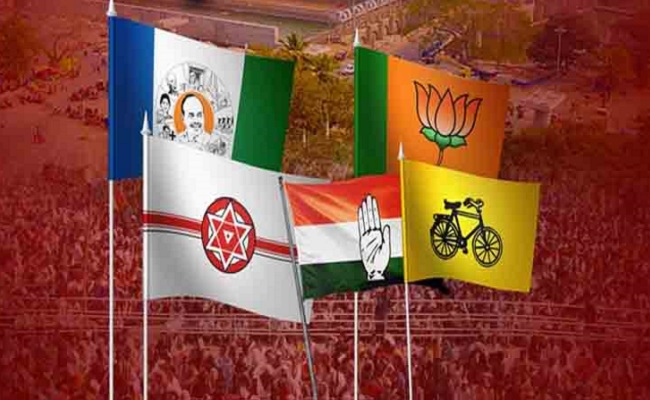
The proposal by the Centre to increase the number of Lok Sabha seats and state assembly constituencies is yet to take a concrete shape, but political parties in Andhra Pradesh seem to have already begun exercises on how to gain control over the new constituencies.
The changes in the assembly seats in Andhra that follow a broader national exercise involving constituency delimitation and women’s reservation, are already triggering intense political calculations over which regions and parties stand to gain the most.
As per the current projections being discussed in political and administrative circles, Andhra Pradesh’s 175 assembly constituencies will increase to 263. Similarly, the number of Lok Sabha seats allotted to the state may rise from 25 to 38.
These estimates have immediately intensified debate over the future political balance between the ruling coalition led by Telugu Desam Party and the opposition YSR Congress Party (YSRCP).
The expected delimitation exercise is also likely to be accompanied by the implementation of women’s reservation, which will reserve a fixed share of seats for women in legislatures.
As a result, political parties are not only assessing which regions may yield more constituencies, but also which of those newly created or redrawn seats are likely to be earmarked for women candidates.
So, the parties are already beginning to assess future candidate pools, caste equations, district dominance, and regional leadership.
The proposed increase is expected to be particularly significant in Rayalaseema and south-coastal Andhra region – from 74 to 111, an increase of 37 seats.
The break-up of increase is: Anantapur - from 14 to 21; Kurnool - from 14 to 21; Kadapa - from 10 to 15; Chittoor - from 14 to 21; Nellore - from 10 to 15 and Prakasam - from 12 to 18.
This is politically significant because the region has seen dramatic shifts in electoral fortunes in recent years. In the 2019 elections, the YSRCP dominated the region, while in the 2024 elections, the coalition gained the upper hand in many segments.
In the central Andhra, the number of assembly seats will go up from 17 to 25 in Guntur district and from 16 to 24 in Krishna, taking the total number of seats to 49.
These districts currently remain important strongholds for the ruling coalition, and any delimitation-based expansion here is likely to significantly influence the state’s future power structure.
For the YSRCP, how it adapts to the new constituency geography in these districts could prove decisive.
The East and West Godavari districts, often seen as electorally decisive in Andhra Pradesh politics, are also expected to witness major gains in seat count.
In East Godavari, the assembly seats will go up from 19 to 28 and in West Godavari, from 15 to 22. Together, the two districts would rise from 34 to 50 assembly seats.
These districts are of particular strategic importance because they are seen as politically influential, socially complex, and electorally competitive.
The ruling coalition, including Jana Sena chief Pawan Kalyan, performed strongly here in the recent elections.
With more seats likely to be added, local caste equations, regional leadership networks, and alliance arithmetic are expected to become even more crucial.
In North Andhra, the proposed rise in seats is also substantial – in Visakhapatnam – from 15 to 23; in Vizianagaram from 9 to 15; and in Srikakulam, the number is expected to rise to 15. Taken together, the region’s seat count is estimated to increase from 34 to 53.
North Andhra has long played a key role in determining statewide political momentum, and any major expansion here is expected to alter candidate selection, district leadership equations, and coalition strategies.
If the assembly strength rises to 263, the majority mark to form government would move to 132 seats. So, whichever party gets control over the increased seats will come to power in 2029, say analysts.
However, the political impact will ultimately depend on the final delimitation formula, actual population data, reservation patterns, and the precise manner in which district and constituency boundaries are redrawn, they added.