


Movie: Ustaad Bhagat Singh
Rating: 2/5
Banner: Mythri Movie Makers
Cast: Pawan Kalyan, Raashi Khanna, Sreeleela, R Parthiban, Rao Ramesh, Praveen, Prabhas Seenu, Satyam Rajesh, Gowtami, KS Ravikumar, LB Sriram and others
Screenplay: K Dasharath, Ramesh Reddy
Music: Devi Sri Prasad
Background Score: Thaman S
DOP: Ayananka Bose
Editor: Karthika Srinivas
Fights: Ram Laxman, Nabakanth, Prudhvi
Art: Anand Sai
Producers: Naveen Yerneni, Ravi Shankar Yalamanchili
Written and Directed by: Harish Shankar
Release Date: Mar 19, 2026
Pawan Kalyan and Harish Shankar’s "Ustaad Bhagat Singh" has been in the making for several years. After multiple delays, the film has finally hit the screens today.
Let’s see whether the duo has recreated the magic they delivered with "Gabbar Singh" nearly fourteen years ago.
Story:
Bhagat Singh (Pawan Kalyan), a former police officer, now leads a quiet life in the Nallamala forests. Into this setting arrives a wealthy industrialist, who plans a pre-wedding celebration for his younger daughter at a forest resort.
Meanwhile, his elder daughter Sloka (Raashi Khanna) is struggling to move on from a painful breakup. Bhagat Singh takes it upon himself to ensure the family’s safety.
At the same time, Telangana Chief Minister Nalla Nagappa’s (Parthiban) son enters the forest for a private party, only to be abducted by Bhagat Singh. In response, Nagappa deploys a jihadi group to rescue his son.
But what drives Bhagat Singh to kidnap the Chief Minister’s son? How is this extremist group connected to his past operations as a police officer in Hyderabad? What happened to his lover Leela (Sreeleela)? And will Bhagat Singh succeed in installing the right leader as the new Chief Minister?
Artistes’ Performances:
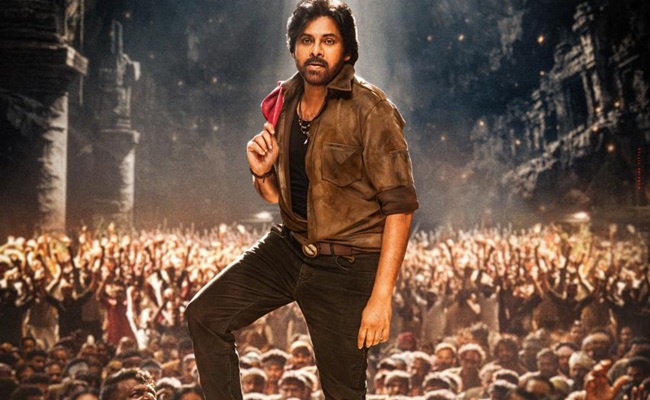
Pawan Kalyan leans more towards showcasing his “star” charisma than delivering a performance-driven portrayal. He appears in multiple getups—some evoking his vintage style, others sticking to a more familiar look. However, the role largely seems designed to reflect his political ideology, with several dialogues echoing his party stance, personal image, and even his current alignment with BJP-leaning themes.
Among the female leads, Sreeleela gets the more substantial role. Her track in the second half is neatly handled and somewhat reminiscent of the arc Samantha had in “Theri.”
Raashi Khanna, on the other hand, is largely underutilized, serving little more than a filler presence in the first half.
Parthiban, as Nagappa, has a strong physical presence, but the characterization is routine, and his performance doesn’t offer much variation.
The comedy track featuring Satyam Rajesh, Prabhas Seenu, Praveen, and Ramesh Reddy falls flat, with their portions coming across as dull and boring.
Rao Ramesh and another supporting character seem to echo twists reminiscent of “Dhurandhar,” making their arcs feel derivative. KS Ravikumar is good.
Technical Excellence:
Though Devi Sri Prasad has composed the songs, it is Thaman who has tried to hold the background score. Among the songs, “Dekhlenge Saala” works well on screen, while the remix of “Ee Manase” is passable. But the background score is nowhere the match of “OG”.
The cinematography stands out, and the production design is neat. While the story and screenplay follow a predictable, formulaic route, the dialogue writing manages to leave a mark.
Highlights:
Pawan Kalyan’s swag
Drawback:
The formulaic narrative structure
Weak villain
Over reliance on Pawan Kalyan’s political image
Lack of novelty or entertaining moments
Analysis
Fourteen years ago, when “Gabbar Singh” hit the screens, it turned into a massive blockbuster and played a crucial role in reviving Pawan Kalyan’s stardom. Though inspired by the Hindi hit “Dabangg,” Harish Shankar reworked the material smartly by adding his own flavor and tailoring it to suit Pawan Kalyan’s charisma and swagger. From quirky touches like the Antyakshari episode in the police station to Devi Sri Prasad’s chartbuster music, the film struck a chord with audiences and remains a fan favorite even today.
Now, Harish Shankar reunites with Pawan Kalyan for “Ustaad Bhagat Singh,” once again presenting him in a cop’s role. While this film is not an official remake, it is evident that the director is from Atlee’s Tamil hit “Theri,” using them as a loose template rather than a full-fledged adaptation.
However, in an attempt to make this familiar story resonate with today’s audience, Harish Shankar leans heavily on Pawan Kalyan’s on-screen and off-screen persona. Unlike “Gabbar Singh,” which thrived on attitude, wit, and entertainment, Bhagat Singh as a character frequently slips into commentary mode, addressing themes like religion, patriotism, and life.
For instance, in one scene in the second half, characters played by Chammak Chandra and Giridhar casually dismiss current news and even hesitate to say “Bharat Mata Ki Jai.” This prompts Pawan Kalyan’s character to launch into a speech about the sacrifices of the army, eventually making them chant the slogan. Such unnecessary “lecture” scenes for the sake of Pawan Kalyan’s current image derail the movie.
Similarly, the narrative integrates elements like jihadi groups, and in the climax, Pawan Kalyan delivers dialogues touching upon issues like Bangladesh people influx, Hinduism, and cultural identity.
Unlike “Gabbar Singh,” the entertainment quotient here is inconsistent. While a few moments click, many sequences fall flat.
A prolonged episode in the first half, where the protagonist humorously interprets “steps” as literally walking to songs like “Kurchini Madata Petti,” is neat. Likewise, some portions, like the stylish entry set to “Tarali Radha Tane Vasantham” in the second half, are better compared to the above “forced” comedy portions.
Much of the film feels cliched. The narrative structure and scene construction appear dated, lacking the freshness. Harish Shankar seems conscious of not turning this into another “Theri,” yet the film doesn’t fully capitalize on even that borrowed template. As a result, the antagonist, played by Parthiban, comes across as weak and underdeveloped.
The first half largely revolves around childhood portions, the Raashi Khanna–Pawan Kalyan track, and the kidnapping episode, while the second half shifts focus to the core plot and the flashback involving the hero’s wife. However, more than the story itself, it is the way the scenes are put together that becomes an issue. Many of them feel random and forced, as if the director has stitched together isolated moments rather than allowing the narrative to flow organically.
The film manages a passable climax, but the overall impact remains underwhelming. Many characters like Gowtami and LB Sriram seem out of place for the story.
Overall, “Ustaad Bhagat Singh” turns out to be a routine, mostly boring commercial entertainer. While Harish Shankar succeeds in presenting Pawan Kalyan in a fan-pleasing manner, the film’s dependence on outdated templates, weak characters, predictable storytelling, and lack of novelty make it a largely cliched affair.
Bottom-line: Outdated Singh