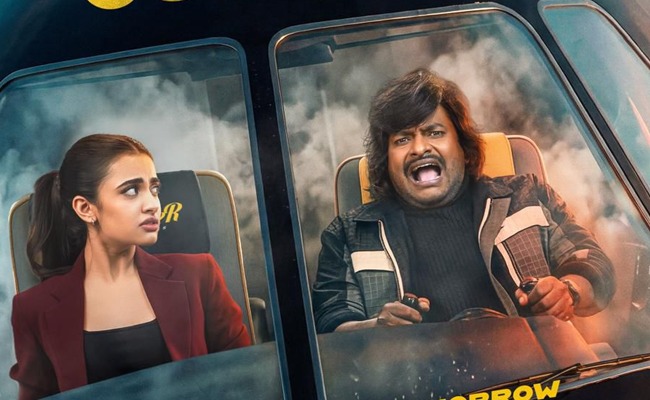




Film: Kara
Rating: 2/5
Cast: Dhanush, Mamitha Baiju, Suraj Venjaramoodu, K. S. Ravikumar, Prithvi Pandiarajan, Karunas, Jayaram
Music: G. V. Prakash Kumar
Editor: Sreejith Sarang
Cinematography: Theni Eshwar
Writers: Alfred Prakash, Vignesh Raja
Producer: Ishari K. Ganesh
Director: Vignesh Raja
Release Date: April 30, 2026
After films like Idli Kadai and Tere Ishk Mein, Dhanush returns with Kara. The trailer suggested a 1990s setting with Dhanush playing a thief, which didn’t generate much excitement initially. However, the presence of Mamitha Baiju and the backing of Netflix added some curiosity.
Let’s see whether his latest outing lives up to that momentum.
Story:
The film is set in 1990 in Thiruverumbur, Tamil Nadu. Karasamy aka Kara (Dhanush), along with his friend, attempts a robbery but gets caught while his friend escapes.
A determined DSP (Suraj Venjaramoodu) takes charge of the case, but Karasamy manages to escape from him as well. The cat-and-mouse chase between them forms one part of the narrative.
On the other hand, Karasamy wants to settle down and seeks financial stability. He visits his father (K S Ravikumar) in Ramanathapuram, intending to sell their ancestral agricultural land. However, the land is already mortgaged.
The bank, led by a greedy regional manager (Jayaram), exploits villagers through excessive interest rates and seizes their lands. Karasamy decides to clear the loan by robing the same bank.
Whether he succeeds in accomplishing his mission forms the rest of the story.
Performances:
Dhanush delivers a rather flat performance this time, sticking to a single emotional tone throughout. There’s nothing particularly standout in his portrayal.
Mamitha Baiju is presented in a deglamorized village role but is given almost no scope to perform. Her character lacks depth and purpose, functioning more like a filler. However, in a brief moment, she still manages to display her natural acting ability, hinting at untapped potential.
Suraj Venjaramoodu starts off promisingly, but his character arc weakens as the film progresses, making him appear ineffective.
Prithvi Pandiarajan feels unnecessary to the plot. Karunas is decent, while K S Ravikumar impresses in his role as the father. Aadukalam Naren appears in a brief cameo.
Technical Aspects:
The film’s technical values are decent. G V Prakash Kumar delivers a good background score, and the songs are pleasant, though not particularly memorable. The Telugu lyrics feel natural and situational.
Cinematography by Theni Eshwar is adequate, but the editing by Sreejith Sarang could have been sharper to improve pacing.
Highlights:
Very few to note
Drawbacks:
Forced melodrama
Predictable scenes
Repetitive narrative blocks
Lack of emotional depth
Lengthy runtime
Analysis:
Dhanush appears to still be operating within the same emotional space seen in Idli Kottu. The repeated focus on father sentiment, forced emotional beats, and prolonged funeral sequences feels overly familiar and, at times, exhausting. Instead of adding depth, these portions come across as outdated and indulgent, reflecting a writing style that does not align with current audience expectations.
The film also fails to function effectively as a suspense or thriller. There is very little that truly hooks or engages the viewer. One potentially interesting idea is the way the protagonist plans to outsmart the police while targeting multiple branches of the same bank. This could have added an intelligent, strategic layer to the narrative. However, the execution falls short.
The robberies follow a repetitive pattern, and many of the situations feel overly convenient and contrived. Rather than showcasing clever writing, these sequences highlight the lack of depth in the screenplay.
The film raises several logical inconsistencies that weaken its credibility. Questions such as why no one reports a stolen car or why the protagonist does not directly target the regional manager, especially when the required amount is relatively small, remain unanswered. These gaps make the narrative feel artificially constructed. There is also a loosely placed scene set within the shooting environment of Devara Magan (Kshatriya Putrudu), which adds little to no value to the overall story.
It seems that Dhanush continues to rely heavily on exaggerated emotional expression, assuming that pathos alone can drive the film. However, storytelling has evolved. Audiences now expect layered characters, sharper arcs and narratives built on intelligence rather than convenience. The writing here leans too heavily on predictable setups and avoids complexity.
The reference to the 1990 Gulf War, highlighted in the trailer, has no meaningful connection to the core plot. In fact, the 1990 setting itself feels like a deliberate choice to bypass modern elements such as mobile phones, thereby reducing the need for tighter, more logical writing.
Kara ultimately turns out to be a predictable and emotionally underwhelming film. Despite having a premise with some potential, it fails to utilize its cast effectively and is weighed down by weak writing and repetitive storytelling.
Bottom-line: Utterly predictable