


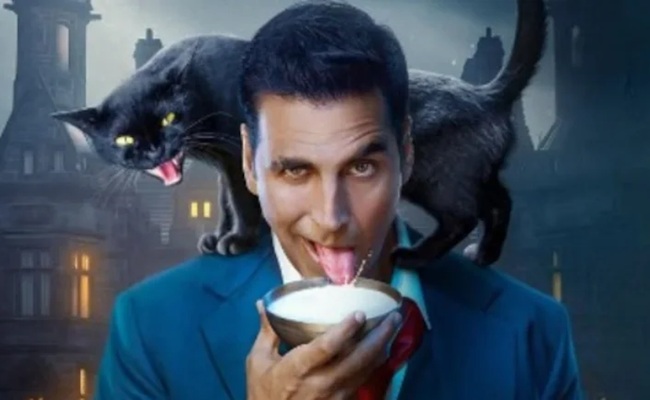
Film: Bhooth Bangla
Rating: 2/5
Cast: Akshay Kumar, Paresh Rawal, Jisshu Sengupta, Rajpal Yadav, Tabu, Wamiqa Gabbi, Manoj Joshi, Mithila Palkar, Asrani, Rajesh Sharma, Bhavna Pani, Zakir Hussain, etc.
Cinematography: Divakar Mani
Editing: M. S. Aiyappan Nair
Music: Pritam (songs), Ronnie Raphael (score)
Producers: Akshay Kumar, Shobha Kapoor, Ekta Kapoor
Director: Priyadarshan
Released on: 17 April 2026
The horror genre has always been a strong choice for commercial appeal, and when blended with comedy, it has often delivered successful results at the box office. This film attempts the same formula, and with a big star like Akshay Kumar leading the project, expectations are naturally high. Many would anticipate something along the lines of Bhool Bhulaiyaa. Additionally, having an experienced director like Priyadarshan at the helm further raises curiosity.
Let us see what the film has to offer.
Story:
The story is set in Mangalpur many decades ago, where something strange haunts the town. No newly married bride survives here, as it is believed to be afflicted by a demon named Vadhusur.
Meanwhile, in London, Arjun Acharya (Akshay Kumar) lives with his sister Meera (Mithila Palkar) and their father (Jisshu Sengupta). Suddenly, a man arrives with a will from their ancestors, declaring them owners of a Rs 500 crore property and a grand palace in Mangalpur. This happens while their father is away in Australia.
Out of curiosity, Arjun travels to Mangalpur and visits the palace. He decides to conduct his sister Meera’s wedding there in that palace in a grand manner. During this time, he meets Priya (Wamiqa Gabbi), a journalist.
Soon, Arjun realizes that the palace is haunted by the demon Vadhusur, though he initially refuses to believe it. What follows forms the rest of the story. Will Meera’s wedding take place? Who is Vadhusur and what is his past? The answers unfold as the narrative progresses.
Artistes’ Performances:
Akshay Kumar appears too old for the role. His age reflects in his body language, though some effort has been made to mask it visually.
Wamiqa Gabbi has a brief role with little emotional depth, though she looks pleasant on screen.
Mithila Palkar is decent as Meera. Jisshu Sengupta, playing Akshay Kumar’s father, appears too young for the role.
Tabu appears in a brief flashback. In some frames she looks aged to the character she played, while in close-ups her face seems digitally enhanced.
Asrani makes a notable appearance in what is said to be his last film. Rajesh Sharma is fine. Zakir Hussain is brief. Rajpal Yadav brings some laughs in the first half.
Paresh Rawal performs well in a full-length role.
Technical Excellence:
The background score is decent, but the songs are average and lack memorable or haunting quality. Cinematography is good. However, the screenplay is sluggish with many stretched scenes.
Editing could have been sharper, as at least 15 minutes of unnecessary content could have been trimmed. The story barely progresses for a significant portion of the first half.
Highlights:
Period Art Work
Production value
Drawbacks:
Beaten-out story
Lengthy screenplay
Weak horror elements
Forced drama
Lacks emotional impact
Analysis:
Horror comedy is often considered a safe genre, provided it is backed by meticulous writing and effective treatment. However, this film struggles on both fronts. It takes far too long to arrive at the central conflict, which weakens audience engagement from the outset. A sharper and more tightly written screenplay could have made a significant difference.
Indian cinema, especially in the South, has produced numerous films in this genre, ranging from big-budget entertainers to smaller attempts. Inevitably, comparisons arise. The benchmark for such films remains Chandramukhi, which set a high standard nearly two decades ago. Any film that fails to match its impact tends to feel underwhelming.
More recently, Stree 2 managed to create a strong impression with its emotional depth intertwined with the supernatural element. In contrast, this film relies heavily on outdated storytelling and predictable treatment.
The comedy feels forced, often relying on excessive cinematic liberties that dilute both humor and horror. Scenes meant to build tension or amusement instead come across as amateurish and childish.
For instance, the subplot involving a wedding being called off due to a clash of muhurtam timings between priests feels overly dramatic and reminiscent of television serial tropes rather than cinematic storytelling.
Repeated scenes of Paresh Rawal burning his back feel forced and repetitive, reducing the humor to cheap, overused comedy that adds little value to the narrative.
Instead of delivering a balanced mix of scares and laughs, the film is weighed down by unnecessary and poorly executed sequences. The intended horror and comedy elements are overshadowed by filler content that fails to engage.
Overall, this film stands as a weak addition to the horror comedy genre, offering little originality or entertainment. It tests the audience’s patience and makes one question the makers’ decision to invest in such a script. The film assumes that the same outdated horror tropes will still scare and amuse, and delivers a tiresome and uninspired experience.
Bottom line: Boring Bangla