



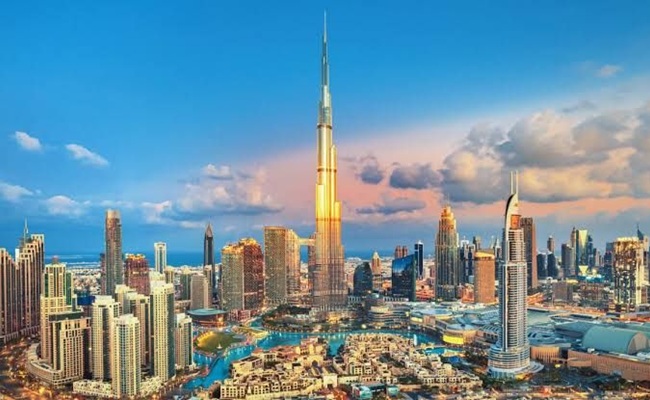
The property boom that drove rapid development across the United Arab Emirates is now facing its first major test after reported Iranian missile strikes rattled the region’s reputation as a safe investment destination.
The attacks, which targeted airports, ports, and residential areas in Dubai and Abu Dhabi, have unsettled investors and created uncertainty in a real estate market heavily dependent on foreign capital.
For years, Dubai’s property sector thrived on rapid sales of off-plan projects, with many developments selling out within hours of launch. But the recent geopolitical tensions have created a more cautious mood among buyers and investors.
Data from the brokerage firm Betterhomes shows that off-plan properties accounted for about 65% of all transactions in Dubai in 2025, highlighting how much of the market depends on projects that are still under construction. If international demand weakens, this pipeline could face significant pressure.
Financial markets reacted quickly. Shares of major developers such as Aldar Properties and Emaar Properties fell roughly 5%, while bond prices of several property firms also declined.
The bond market; an important funding source for UAE developers; has effectively paused new issuances as borrowing costs rise across the sector.
Despite the sell-off, some developers attempted to reassure investors that projects remain on track. Ziad El Chaar, head of luxury developer Dar Global, said the region has weathered similar challenges before and that the fundamentals of the Gulf Cooperation Council remain strong.
“Nothing is on hold… everything is on track,” he said.
However, some industry insiders say the impact is already visible. A senior real estate banker told Reuters that his firm has paused a planned capital raising linked to UAE property.
According to him, investors are currently reluctant to commit funds to the region as risk perceptions have increased.
International lenders may also become more cautious with fresh lending if tensions continue, potentially forcing developers to sell assets to raise liquidity.
Over the past two decades, Dubai’s skyline has been transformed by ambitious developments. Projects like Palm Jumeirah became global luxury landmarks, while construction continues on Palm Jebel Ali, an even larger palm-shaped project. Abu Dhabi has also expanded steadily through coastal development and large infrastructure investments.
The property rally accelerated after the COVID-19 pandemic as the UAE introduced reforms aimed at attracting global investors. A tax-free environment, flexible visa rules, and broader economic liberalisation drew wealthy individuals and global capital into the country.
Among those driving demand were Russians relocating after the war in Ukraine, as well as billionaires, family offices, and hedge funds attracted by the UAE’s ambition to position itself as a global financial hub.
By 2025, the UAE’s population had crossed 11 million, with expatriates making up nearly 90% of residents, one of the highest proportions in the world.
This influx pushed property prices sharply higher. According to Fitch Ratings, Dubai real estate prices rose 60% between 2022 and early 2025.
Later in the year, CBRE reported that residential prices in Dubai increased nearly 13% year-on-year, while Abu Dhabi property values jumped almost 32%.
Experts say the real impact of the current tensions will become clearer once the conflict subsides. Mohammed Ali Yasin, a company linked to Lunate, said demand trends after the conflict ends will reveal the true effect on the property sector.
“The real impact on real estate will be measured by how demand responds once the conflict stops,” he said.
Concerns about oversupply had already begun to emerge before the latest tensions. Analysts at JPMorgan estimate that 300,000 to 400,000 new housing units could enter Dubai’s market by 2028, raising questions about whether population growth can absorb such supply.
Meanwhile, economists at Abu Dhabi Commercial Bank emphasised that foreign buyers remain crucial to the market’s stability. Any decline in overseas demand could significantly impact property sales.
With new housing supply expected to increase from the second half of this year and geopolitical tensions still unfolding, uncertainty may weigh on investor sentiment.
According to Ryan Lemand, prolonged instability could dampen property investment.
“Real estate investment relies heavily on stability, visibility and investor confidence,” he said. “All of these tend to weaken during extended geopolitical uncertainty.”