

 Epaper




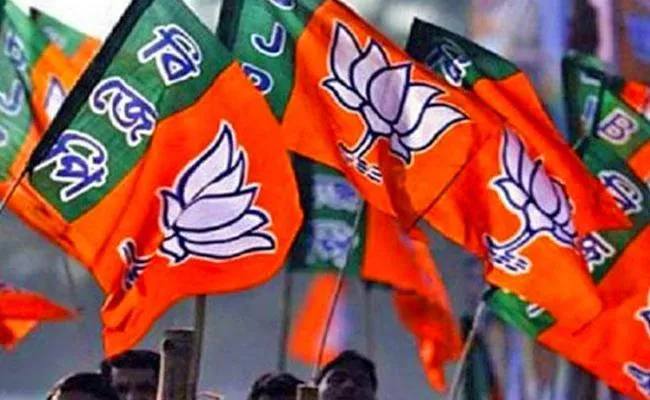
Dravidian politics in Tamil Nadu is mainly built on the ideas of social justice, Tamil identity, state autonomy, welfare politics and opposition to caste domination.
Both DMK and AIADMK came from the same Dravidian movement, so both support reservations, welfare schemes, Tamil language pride and resistance to Hindi imposition.
DMK is usually more ideological and rationalist, while AIADMK became more populist and leader-driven under figures like M. G. Ramachandran and J. Jayalalithaa.
The BJP finds Tamil Nadu difficult because the state’s political culture is very different from north Indian politics.
In many states, BJP grows through Hindu consolidation and nationalism. But in Tamil Nadu, Tamil identity, caste coalitions, welfare politics and regional pride are stronger than pan-Hindu politics.
Even though most people are Hindus, many separate religion from voting behavior. A voter may be deeply religious yet still prefer Dravidian parties because they are seen as protectors of Tamil culture and state rights.
Leaders like K. Annamalai have increased BJP visibility through social media, aggressive speeches and anti-corruption campaigns, but visibility alone does not create electoral victories.
Tamil Nadu elections depend heavily on booth networks, caste arithmetic, local leaders and alliances. BJP still lacks a broad statewide social coalition.
Its decline from 4 seats to 1 seat in the 2026 election was also influenced by the rise of TVK led by Vijay, which attracted anti-DMK and youth votes.
TVK differs from DMK and AIADMK by presenting itself as a fresh anti-establishment alternative focused on clean governance, youth politics and Tamil identity without carrying old corruption baggage. However, its long-term ideology is still evolving.
One interesting aspect of Tamil Nadu is that famous Hindu temples continue to flourish despite decades of Dravidian rule associated with rationalism and atheism. This is because Tamil society separates religion from political ideology.
Dravidian parties criticized social hierarchy and religious orthodoxy, not necessarily personal faith. Temple culture remains emotionally and culturally central to Tamil people.
Even an alliance between BJP and ADMK often appears more like a political adjustment than a natural ideological partnership. It is closer to “water and sand” than “water and milk” because their core political cultures are fundamentally different.
BJP’s politics is centered around pan-Indian Hindu nationalism, cultural unity and strong central leadership, while ADMK emerged from the Dravidian movement that prioritizes Tamil identity, regional autonomy, social justice and resistance to Hindi imposition.
Although ADMK has a softer and more religion-friendly image compared to DMK, it still operates within the broader Dravidian framework that Tamil voters emotionally connect with. Because of this ideological mismatch, BJP struggles to fully transfer its voter base to ADMK and vice versa.
Many ADMK supporters are uncomfortable with BJP’s Hindutva-centric politics, while many BJP supporters feel ADMK does not strongly represent their ideological vision.
As a result, their alliance often looks electorally convenient rather than organically compatible, limiting BJP’s ability to deeply establish itself in Tamil Nadu through ADMK. Voters are aware of this and hence the result.
Kerala and Tamil Nadu remain hard states for BJP because both have strong regional political cultures, high literacy, welfare-oriented politics and established non-BJP ideological ecosystems.
BJP may grow slowly in the future only if it builds deep local leadership, embraces Tamil cultural identity sincerely, avoids appearing Hindi-centric and creates broad alliances instead of relying only on religious polarization or divide-and-rule politics.
A major limitation for BJP in Tamil Nadu is the absence of a strong pro-Hindu party that also firmly preserves Tamil regional identity, making it difficult for BJP to build durable alliances and establish itself in the state.
BJP moved from Ram to Bhim.
Tamilnadu is attached more to language. I think they are worried about their language than religion. Modi has long ago declared Tamil is the oldest language but it has not satisfied them.
Ram to bhim ah 😂😂. Bhim is better, I don’t know about ram
Ram to bhim ah 😂😂. Bhim is better, I don’t know about ram
highest in gdp, Tamil Nadu know who to vote for. Not about religion here
highest in gdp, Tamil Nadu know who to vote for. Not about religion here
Because Tamilians don’t understand the magnanimity of their own Advaita philosophy and there is nothing else that Islam or Christianity can offer other than Advaita at best.
Just the below Sukta from Rig Veda tells how much deeper thinking is back more than 3500 years back itself yet Hindus think they’re inferior.
Also the same Muslims who say they are abused in India ignore the fact that they constitute about 25% of India and the second highest Muslim population and still living peacefully and overall given how Pakistan and Bangladesh treat Hindus and especially given the fact that all Islamic nations don’t even give citizenship to non Muslims like Saudi Arabia,and many Islamic nations.
The thing is that Tamils were living cozily while the north bore the brunt of the Islamic invasion and many genocide under Islamic rule.
So Tamils don’t feel the pain so they ignore the sentiments of North Indians.
అక్కడ మతం కన్నా భాష ప్రధానం.
TAMILNADU IS CONTEMPT WITH FINANCE MINISTER POST.
Why negotiate with Yugesh – Nirmala Maam??
HOW CAN TDP WIN IN ANDHRA PRADESH WHEN SO MANY ARE CONTEMPT WITH YCP??
Cerebral Palsy Drugs Clinical Trials…..