

 Epaper




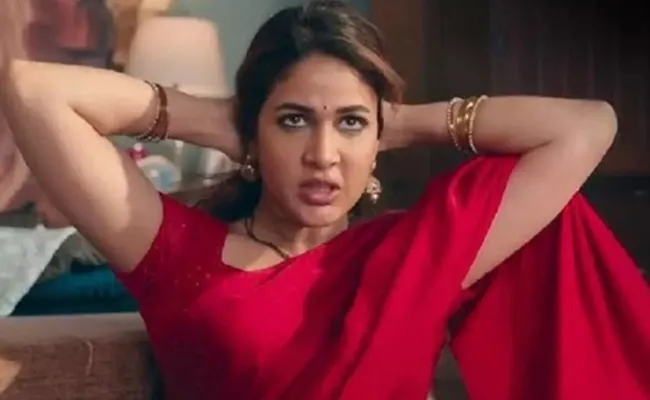
Film: Sathi Leelavathi
Rating: 1/5
Cast: Lavanya Tripathi, Dev Mohan, Madonna Sebastian, Naresh, Pavitra, VTV Ganesh, Jaffer Sadiq, Tagubothu Ramesh, Joshi, Saptagiri, Motta Rajendran, etc.
Music: Mickey J. Meyer
Cinematographer: Binendra Menon
Editor: Sathish Surya
Producer: Naga Mohan Babu
Director: Satya Tatineni
Released on: 8 May 2026
Lavanya Tripathi, after becoming the daughter-in-law of the Konidela family, has come up with this Telugu film. Looking at the title, it suggests a female-centric story. Since Lavanya is mainly known on screen for Shakunthalam, it is clear that audiences who wish to watch the film may do so either for Lavanya Tripathi or after liking the trailer.
Well, let us see what the film has to offer.
Story:
Leela (Lavanya Tripathi) is a film director who is married to her childhood orphan friend, Sethu (Dev Mohan). Sethu never gets enough time to talk to his wife, as she is extremely busy with her film profession. Eventually, he grows distant from her and asks for a divorce. He hires a lawyer, played by VTV Ganesh.
Leela suspects that Sethu is in a relationship with another woman. What happens next? Will she agree to the divorce, and who is the other woman? The answers form the rest of the story.
Artistes’ Performances:
Lavanya Tripathi performs her part adequately but never truly connects with the audience due to the weak scriptwriting.
Dev Mohan also has a lead role to play, but throughout the film, his dubbing sounds like a Malayali speaking Telugu dialogues. Well, that is not a major issue, but the core character arc itself is not strong enough for the audience to connect with.
Madonna Sebastian appears as Nicola Sebastian, but her portrayal does not justify the hype created around her character in the story.
Naresh and Pavitra fail to entertain with their outdated comedy scenes.
VTV Ganesh appears in a stereotypical role. Saptagiri tries to bring laughs to the theatre, but he fails. Rajendran, as Motta Rajar, irritates on screen with his characterization.
It is better not to discuss the rest of the cast, as their roles serve little purpose other than adding to the frustration.
Technical Excellence:
Mickey J. Meyer tried to leave his mark with the songs, and he succeeds to an extent. Though the songs are not hauntingly memorable, they are pleasant to hear while watching the film. However, the background score is not up to the mark.
The cinematography is decent, but for a film with this kind of content, nothing really stands out visually. The editing does its job, but the content makes the film feel lengthy even though the runtime is just 2 hours and 11 minutes.
Highlights:
Nothing
Drawbacks:
Everything
Analysis:
If anybody asks how not to make a film, this can be shown as an example. It really makes one wonder how this script got approved to be made into a film.
The idea is to convey that ignoring one’s partner in the pursuit of a profession is a mistake, and getting involved with another woman outside marriage is equally wrong. However, to communicate this message, a weak script has been written and because of the junk-filled, amateurish narration, the core message hardly reaches the audience.
The entire movie moves in a pointless manner, with zero humour and dull dialogues. The basic character writing is also amateurish, and the whole film feels like a child’s play made without any seriousness towards the craft of writing.
A character in the film suffers from a five-second delay while replying. In fact, a thorough comedy track could have been written around that concept. But it is never properly used, and slowly the audience also forgets about the character’s limitation. The very purpose of that trait gets wasted.
The entire treatment of the film feels like an amateur stage drama. There is a funny fight sequence between the hero and heroine where they fight using film reels. During the fight, the reels start playing scenes of ANR and NTR due to friction. Is that not the height of madness that suffocates any viewer with even a little common sense?
A small spoof sequence inspired by Arundhati also irritates and tests the audience’s patience.
There is a dialogue in the film, “He has piles, so he cannot sit longer.”
But the real issue is that the audience, despite not having piles, find it difficult to sit through the film even beyond the interval.
There is also a dwarf character with two twins as sidekicks, and they serve no purpose other than irritating the viewers.
What reaches the heights of absurdity is the climax. What exactly did the director intend to narrate, and what was finally shown on screen? Couldn’t even the actors assess how it would eventually turn out? It is a gruesomely “mental” climax.
To sum up, there is another dialogue in the climax where a character folds his hands and pleads, “I have BP and cholesterol, please leave me, madam.” The audience silently relates to that dialogue while bearing the film till that time. It is very rare to come across films like this. This film stands among the most pointless and uninteresting films of the year.
Bottom Line: Exhausting Watch