



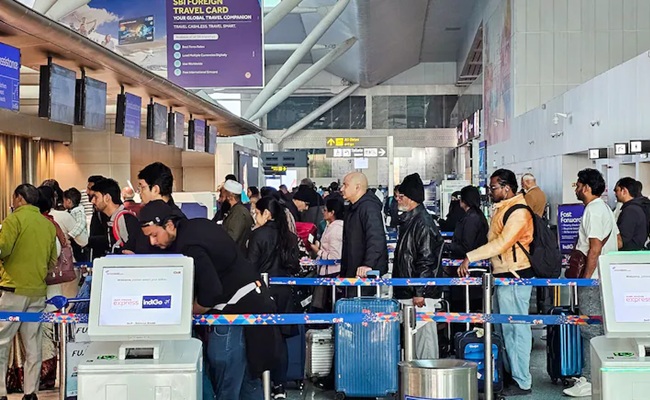
Many citizens and sections of the media are attributing the ongoing aviation disruption to IndiGo Airlines. However, from another perspective, it appears reasonable to examine the role of government policy in this situation.
The recent GO issued by the aviation ministry, although intended to address safety concerns, has raised questions because its immediate implementation has created operational challenges.
While pilot fatigue is recognized as a global aviation issue, publicly available data in India does not clearly establish its influence on past accidents. In contrast, several investigations have highlighted technical or procedural factors.
IndiGo, operating more than 2200 flights daily, has maintained a reputation for punctuality and stable operations.
Even Air India, under both government and Tata management, has faced difficulties matching IndiGo’s consistency.
This prompts the question of whether increasing mandatory weekly rest from 36 to 48 hours should have been introduced through a gradual process that allowed the industry to adapt.
Additional rest requirements may require airlines to hire more pilots, which could raise operational costs and eventually affect ticket prices.
At the same time, the government’s recent regulation of airfares limits airlines from adjusting prices based on demand.
When combined with rising fuel costs, airport rentals, and safety compliance expenses, these factors can create significant financial pressure.
It is important to consider whether the timing and method of implementing the GO adequately accounted for these realities.
India has previously witnessed the collapse of several airlines such as Kingfisher, Jet Airways, Paramount, Air Deccan in its later phase, and TruJet due to financial and operational difficulties.
In this context, stakeholders may reasonably question whether current policies risk placing additional strain on even the strongest carriers.
Is the government unintentionally pushing IndiGo toward the same fate as other airlines, or is there a larger corporate motive behind the scenes? It may sound like a conspiracy theory, but the circumstances raise questions.
Some citizens have criticised the aviation minister on social media, and certain advocates have reportedly considered legal steps.
However, before blaming IndiGo, it may be more constructive to examine whether the policy framework itself required a phased or consultative rollout.
If the GO has contributed to disruption, accountability for its implementation rests with the aviation ministry and the central government.
This argument does not question the importance of safety or pilot welfare. It only suggests that regulatory changes of this scale need a measured approach to avoid unintended nationwide consequences.