


 Epaper




In the wake of ongoing allegations over the integrity of the Election Commission of India, the YSR Congress Party, headed by former Andhra Pradesh Chief Minister Y S Jagan Mohan Reddy, has once again sparked a debate on social media by raising doubts over whether the 2024 elections in the state were conducted in a free and fair manner.
Even Telangana Minister Komatireddy Venkat Reddy expressed doubts over the outcome of the 2024 elections in Andhra Pradesh, stating that Jagan should not have lost the polls after implementing several welfare schemes and suggesting that something may have gone wrong in the conduct of the elections.
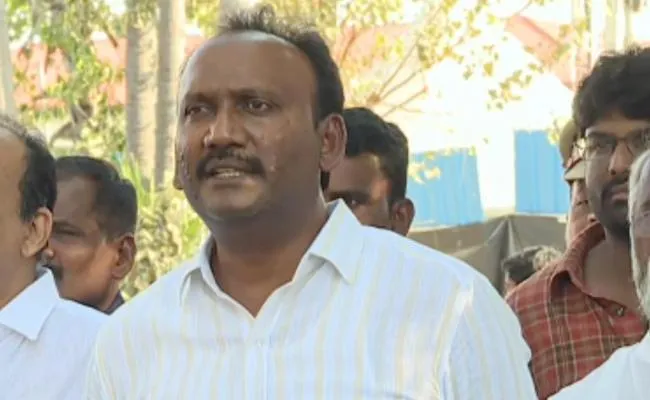
Against the backdrop of these arguments, an old video of former YSR Congress Party (YSRCP) MLA Aamanchi Krishna Mohan analysing the party’s crushing defeat in the 2024 Andhra Pradesh Assembly elections has resurfaced on social media.
The video is being widely circulated by YSRCP supporters with the caption, “Jagan, please watch this,” urging the party president to take note of the concerns raised by the former legislator.
In the video, Aamanchi attributed the YSRCP’s humiliating defeat in the elections to Jagan’s overdependence on the Indian Political Action Committee (I-PAC) and the election surveys conducted by it from time to time.
He said election surveys alone could not provide a reliable picture of the political situation unless they were supported by an effective system for communicating people’s concerns to the party leadership.
According to him, the leadership failed to receive an accurate assessment of ground realities and did not fully understand the extent of public dissatisfaction before the elections.
He questioned how teams involved in election strategy and surveys, including I-PAC, could fail to assess the party’s position despite the substantial amounts reportedly spent on such exercises.
He argued that agencies entrusted with election-related assessments had a responsibility to provide the leadership with a realistic estimate of the number of seats the party could win, rather than offering assessments that failed to reflect the prevailing political mood.
Aamanchi claimed that he had warned several leaders before the elections that the YSRCP would struggle to win more than 30 to 40 seats.
He said he had conveyed his assessment of the political situation to Dhanunjaya Reddy, some I-PAC representatives and other party leaders.
Aamanchi identified the lack of regular interaction between the Chief Minister and elected representatives as another factor that may have contributed to the defeat.
“A Chief Minister should periodically consult MLAs, obtain constituency-level feedback and convene legislature party meetings every two or three months to review public grievances and administrative performance,” he said.
According to him, MLAs are better placed to understand local issues, identify dissatisfaction among voters and suggest corrective measures.
Regular discussions with them could help the leadership obtain a more accurate picture of public opinion than surveys conducted by outside agencies.
He argued that the YSRCP leadership did not maintain such consultations to the extent necessary during Jagan’s tenure, weakening its ability to identify and address problems before they translated into electoral opposition.
Aamanchi also questioned the assumption that the implementation of welfare schemes would automatically translate into electoral support.
He said voters considered not only the financial assistance they received from the government but also the increase in household expenditure and the overall cost of living.
According to his analysis, families assessed the benefits of welfare schemes against the additional financial burden they faced in their daily lives. This was particularly relevant for middle-class households, which closely compared their incomes with rising expenses.
He cited expenditure on petrol and diesel, electricity bills, liquor and sand among the issues that could affect public perception of the government.
Aamanchi also referred to the administration of former Chief Minister Y. S. Rajasekhara Reddy, highlighting what he described as differences in political engagement and governance.
He said Rajasekhara Reddy maintained regular contact with the public, party leaders and officials, placing emphasis on understanding grievances, resolving problems and coordinating development activities.
Aamanchi argued that the political experience and administrative approaches of Rajasekhara Reddy and Jagan should not be treated as identical, particularly in terms of engagement with elected representatives, coordination with the bureaucracy and attention to local issues.


Pora Puski,
Anna odipoyindi
Athi manchi thanam, athi nijayathhe valla
Anybody is interested now to know he lost or anybody even bothered if he would win now?
Arrogance of vote chorii scheme.
Except accepting it as people’s verdict they have all the excuses in the world
Same excuses were said by CBN in 2019. Looks like you preached him into becoming the beneficiary of vote chorii by falling at the feet of Godi Shah.
Jagan’s dependence on his own mind as a CM made him lost his power in 2024. Period
He lost power because of successful negative campaign of TDP. This is the major factor.
Midnight 12 tarvatha every 6sec ki 1 vote vese champions unappudu ilanti defeat is expected.